Siding Repair and Hail Damage Restoration in Calgary
Siding repair in Calgary usually starts with one of three things: a hailstorm, a windstorm, or a stain or soft spot that points to water in the wall. This page explains the four kinds of repair work we do, how they differ, and how to tell whether your house needs a few boards, a full elevation, or a look at what is behind the siding.
How These Systems Differ
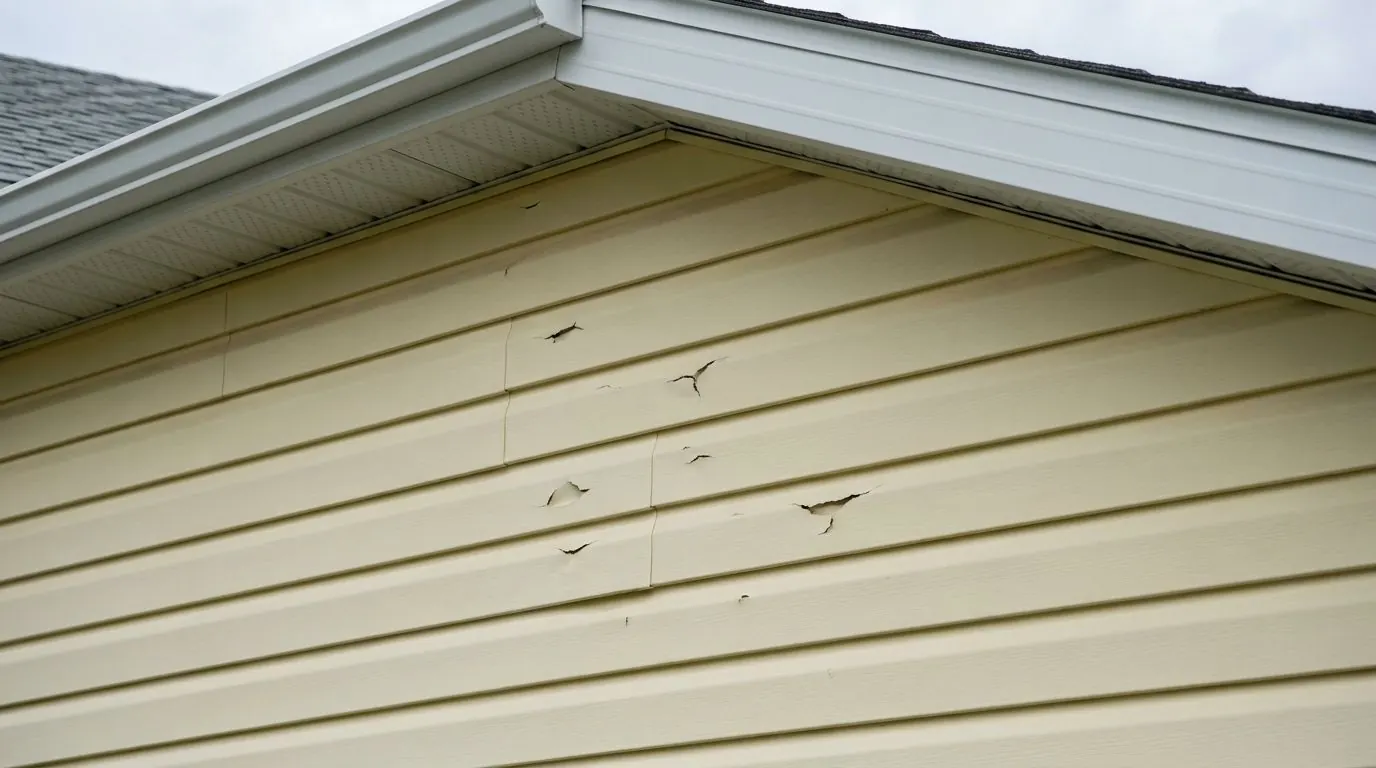
Hail damage siding replacement covers walls hit by storms. Hail driven by wind strikes walls at an angle, and building scientists at Simpson Gumpertz & Heger note that softer, more brittle materials such as vinyl resist horizontally travelling hail less well than systems like stone, masonry or stucco. There is currently no industry-accepted hail resistance rating for wall coverings; UL 2218 and FM 4473 are roofing tests. After a storm the job is to document the damage, replace what is cracked, holed or split, and decide whether to put the same siding back or choose something that will handle the next storm better. Vinyl profiles and colours get discontinued, and weathered panels fade, so new panels may not match exactly.
Hardie board repair is a different trade skill. Fibre cement resists hail far better than vinyl, but very large hail, impacts and water can still crack, chip or damage planks and trim. James Hardie publishes a repair procedure, so replacing individual boards is a recognized method rather than a workaround. Small nicks in a ColorPlus finish are touched up sparingly with James Hardie’s touch-up applicator; larger areas are replaced. A new ColorPlus board may look slightly different beside a weathered wall, and sometimes repainting the elevation gives the better result.
Sheathing rot repair is the work behind the siding. Sheathing rot is almost always a water problem: a missing kickout flashing, a failed window flashing, a stone base buried in landscaping. The fix is to open the wall, cut out soft OSB or plywood, replace it, and correct the detail that let water in, not just the board. Commercial and multi-family siding brings the same repairs to condos, townhouse complexes and small commercial buildings, where phasing, resident notices and the corporation’s reserve fund study shape the scope, and James Hardie cladding on buildings over 12 m high, or outside Part 9, needs a cladding design from a professional engineer.
Repair & Hail Damage Services
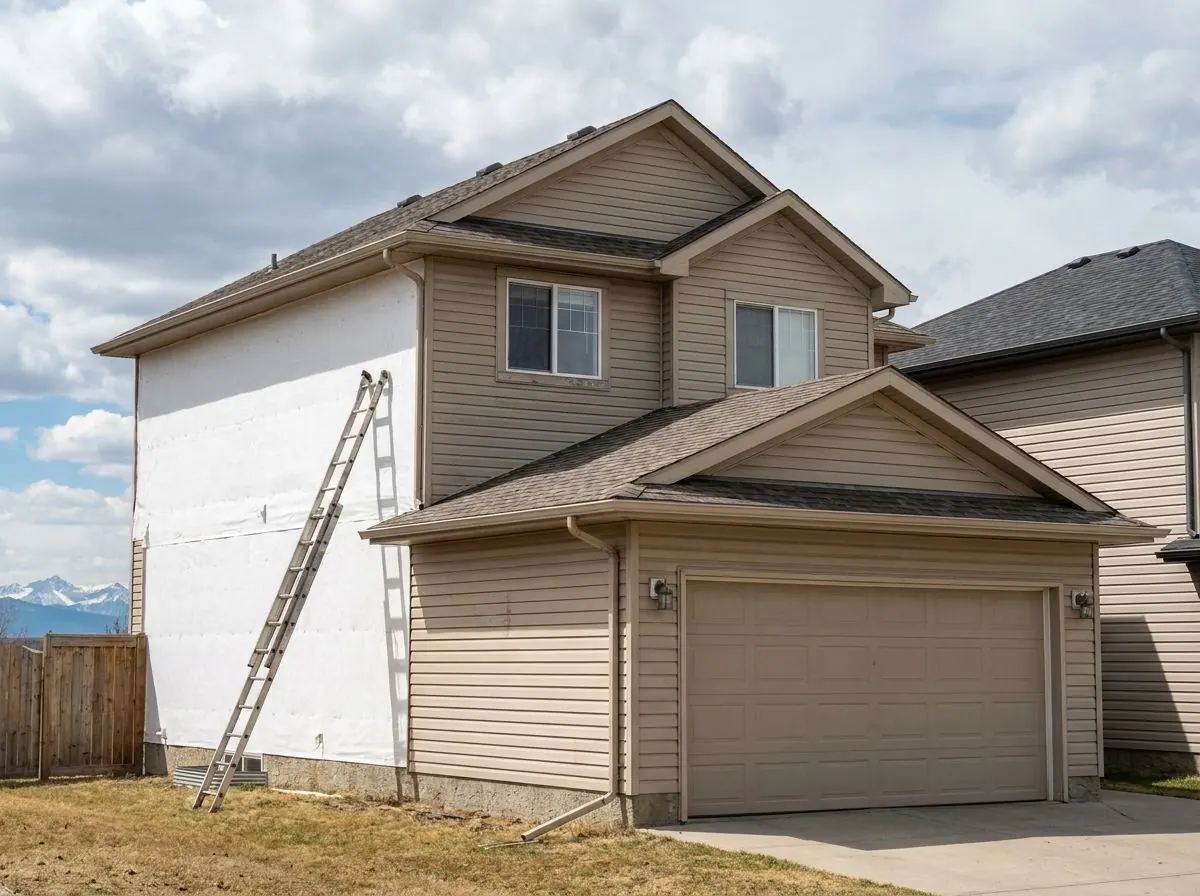
Calgary Hail Damage Hardie Board & Siding Replacement
Storm-damaged siding documented, removed and replaced after Calgary hail.
How it works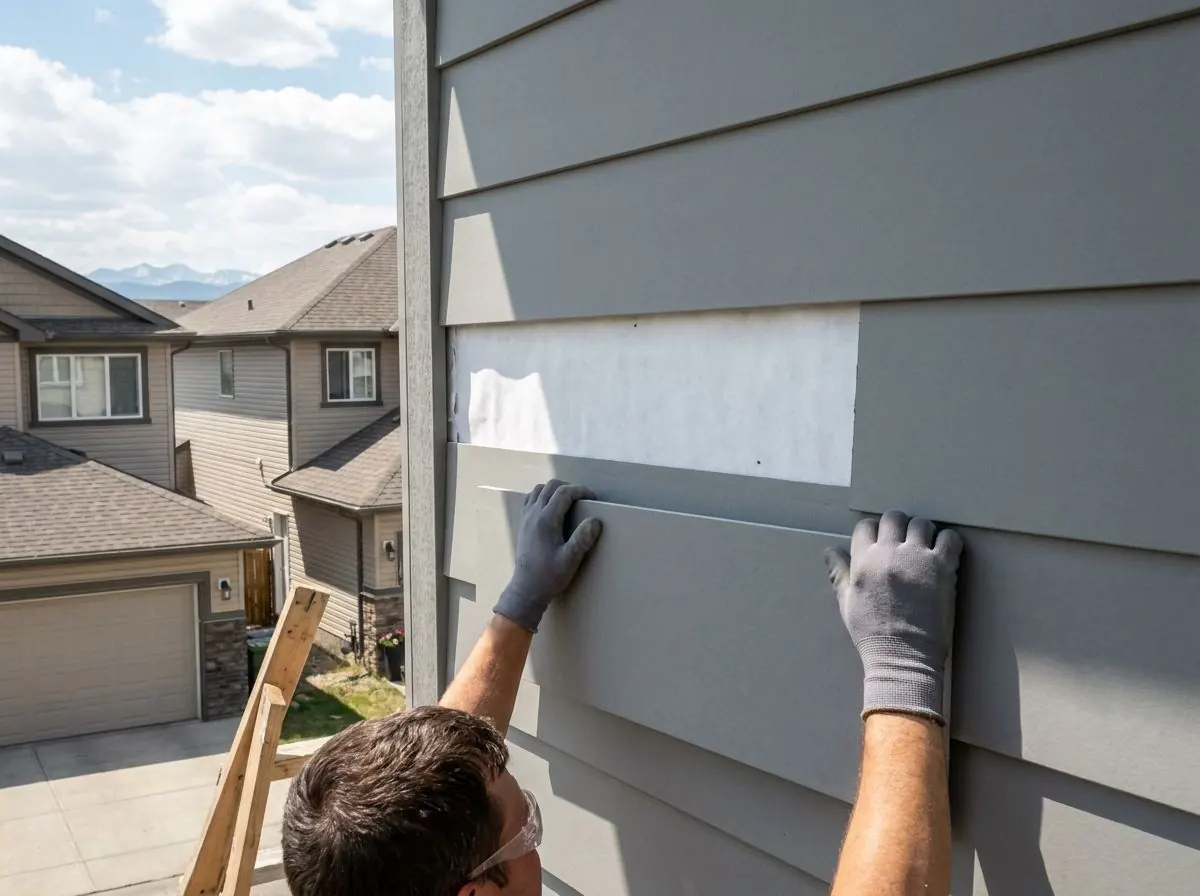
Hardie Board & Panel Sectional Repair
Cracked or failed Hardie boards, panels and trim replaced, and the cause fixed.
How it works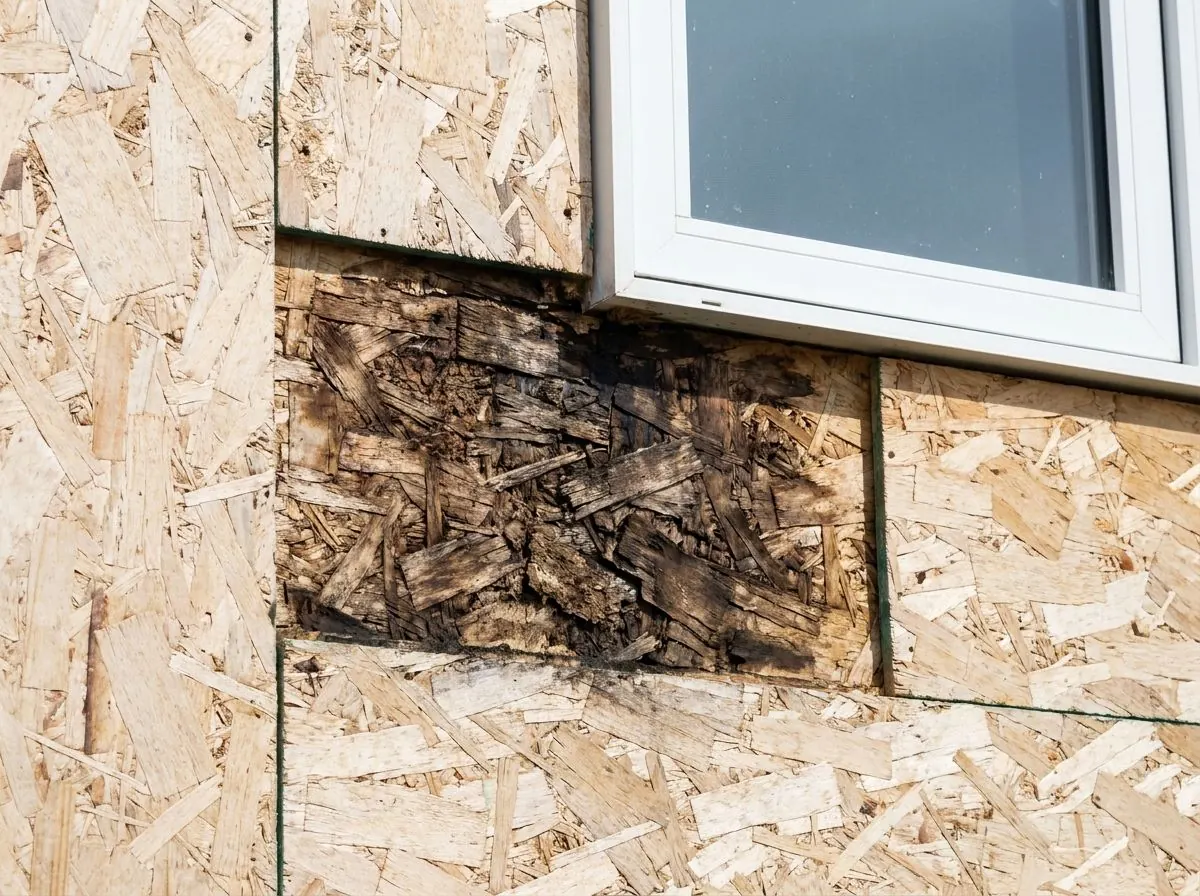
Dry Rot & Substrate Sheathing Restoration
Rotted OSB, plywood and studs replaced, and the water source traced and fixed.
How it works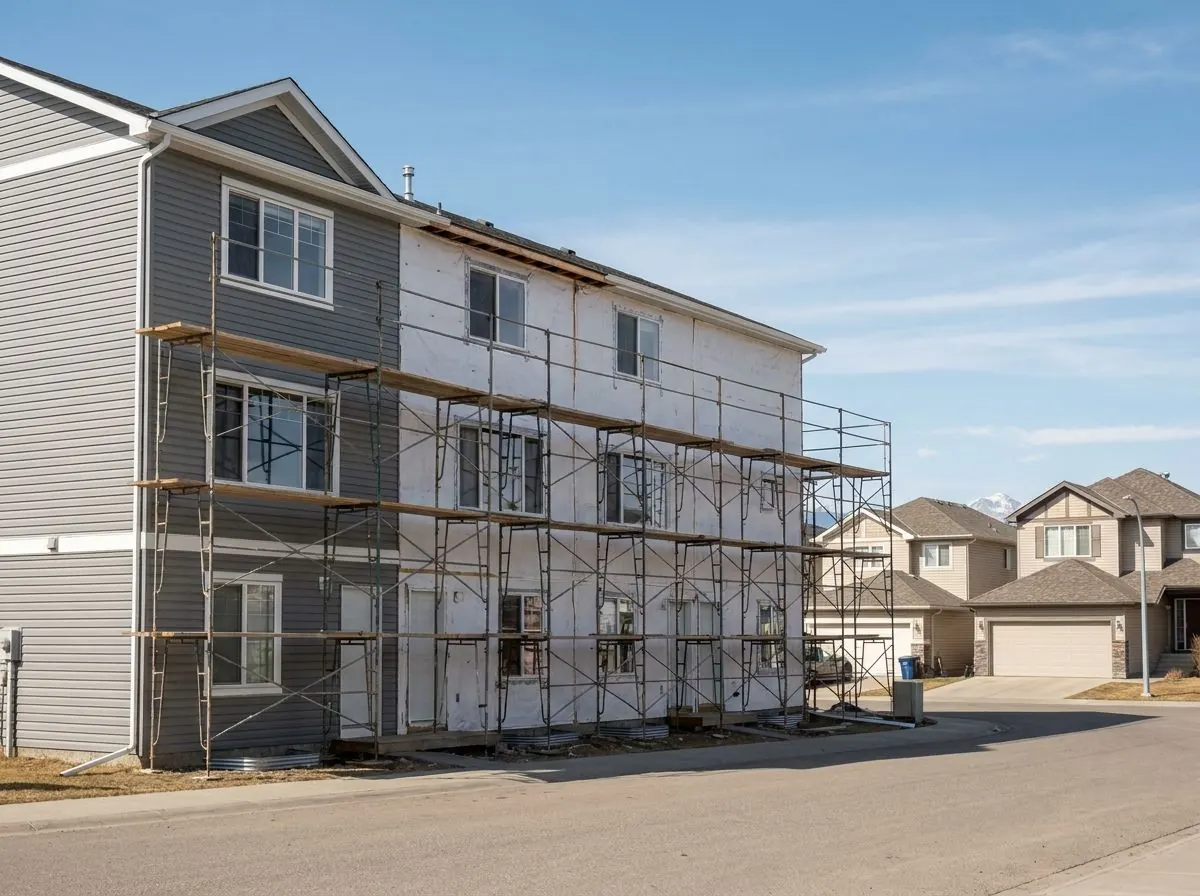
Commercial & Multi-Family Siding Projects
Phased re-cladding for condos, townhouse complexes and commercial buildings.
How it worksChoosing Between Them
- Hail damage siding replacement
- Choose this when a storm has cracked, holed or stripped siding on one or more walls, whatever the material. We provide photos, measurements and a written scope you can give your adjuster.
- Hardie board repair
- Choose this when a fibre cement house has a limited number of cracked, chipped or water-damaged planks or trim pieces, and the rest of the wall is sound enough to keep.
- Sheathing rot repair
- Choose this when siding is bulging, stained or soft to the touch, or when boards come off and the wall underneath is wet or crumbling. It is often found during one of the other two services.
- Commercial and multi-family siding
- Choose this for condo corporations, property managers and building owners who need repairs or re-cladding phased across several buildings or elevations.
Repair & Hail Damage: Common Questions
What should I do in the first days after a hailstorm?
Repair a few boards or replace the whole wall?
How do I tell cosmetic siding damage from a wall problem?
Other Siding & Exterior Services
Talk to Us About Repair & Hail Damage
Tell us about the house and what is going wrong with the walls. We will recommend the system that fits, including when a cheaper one will do.