Vinyl and Engineered Wood Siding for Calgary Homes
Vinyl and engineered wood are the two lighter-weight siding families on Calgary homes, and they behave very differently on the wall. This page compares standard vinyl, insulated vinyl and LP SmartSide engineered wood on looks, upkeep, hail and fire, so you can pick the right one before comparing quotes.
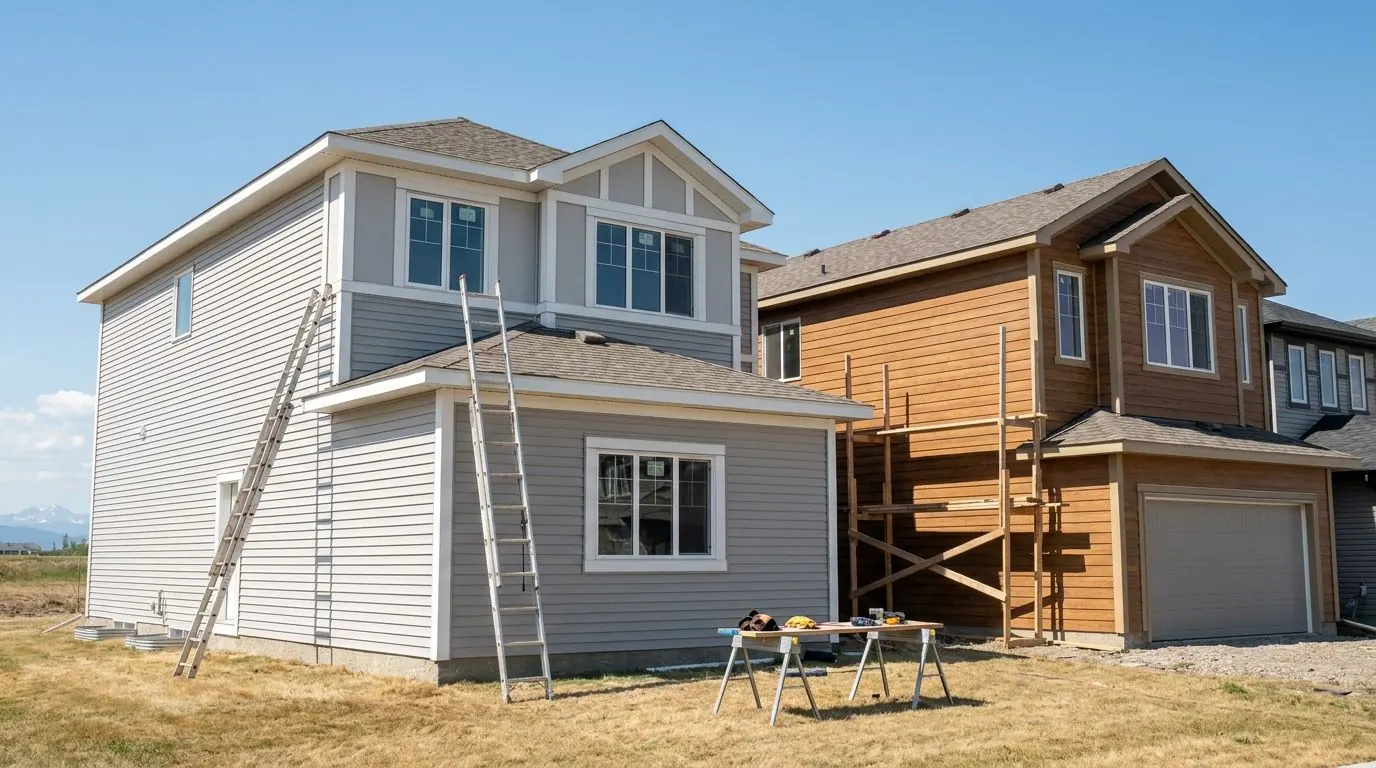
How These Systems Differ
Vinyl siding is the most common cladding in Calgary and the least expensive, a point the City of Calgary’s own climate-ready guide makes. In Alberta, Part 9 of the building code requires vinyl siding to conform to ASTM D3679. Vinyl is sold by nominal thickness in thousandths of an inch, not by gauge: entry lines in Canada run around .040 inch, and premium lines sit in the mid-.040 range, which makes the panel stiffer and less wavy on the wall. Every vinyl system is designed to move. Panels hang loosely on nails centred in their slots so they can expand and contract with temperature, and the industry installation manual notes that a 12-foot-6 panel can move half an inch or more. Nail it tight and the wall has nowhere to go but out of plane.
Insulated vinyl is the same idea with a foam backing bonded to the panel. Its standard is ASTM D7793, and certified insulated siding carries a tested R-value of at least R-2 printed on the packaging; most products add roughly R-2 to R-3.5. The foam stiffens the face, so the wall looks flatter, and the City’s guide says it provides some impact resistance against hail. It is not a substitute for proper exterior insulation, and it remains a niche product in Alberta, so we confirm what is actually stocked before recommending a line.
LP SmartSide is a different material entirely: engineered wood strands bonded with waxes and resins and treated with zinc borate through LP’s SmartGuard process to resist fungal decay. In Canada it is evaluated under CCMC 11826-L against the standard for oriented strand board, so the code’s rules for OSB cladding apply, including sealed edges and a 3 mm gap at door and window frames. It is painted rather than coloured through, needs 200 mm clearance to grade, and is combustible. The City of Calgary rates engineered wood as having good impact resistance compared with vinyl and aluminum.
Vinyl & SmartSide Services
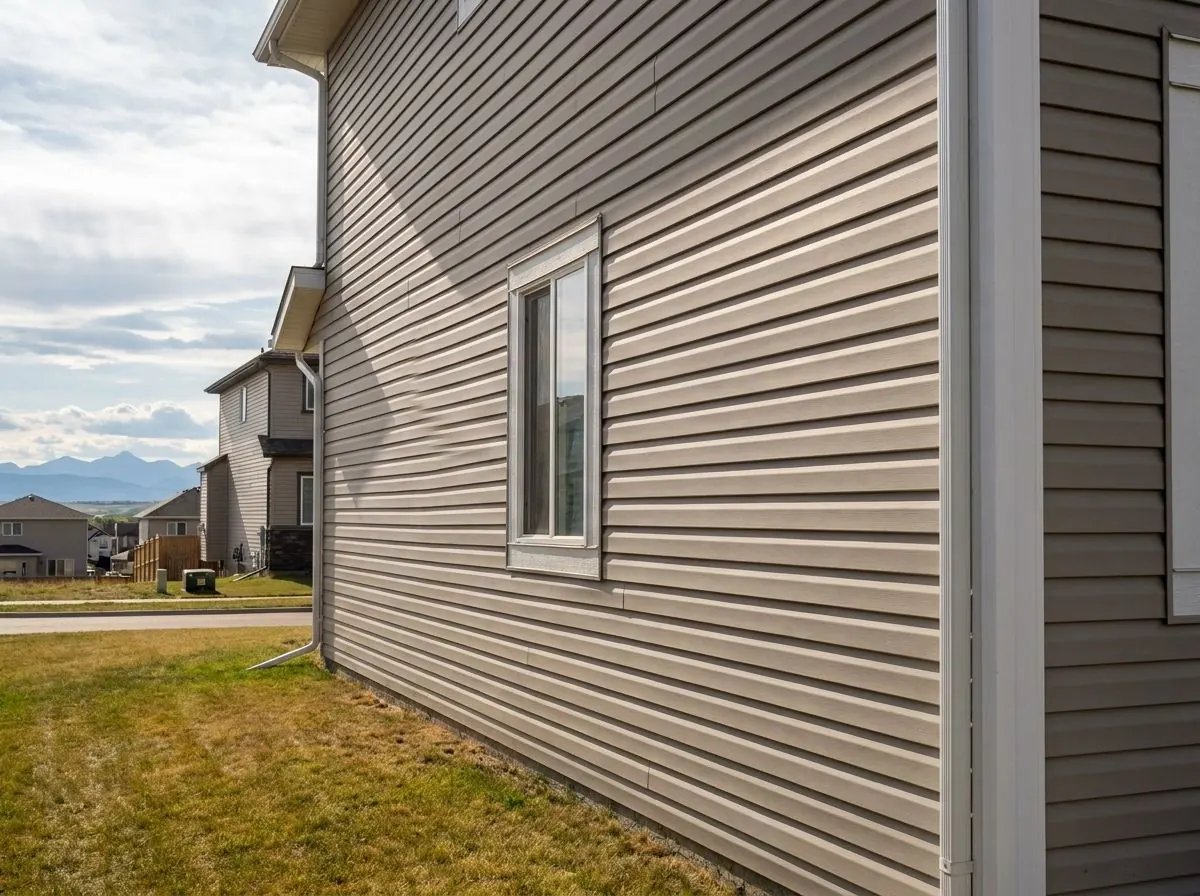
Premium Heavy-Gauge Vinyl Siding
Thicker vinyl panels, hung loose to ride out Calgary’s temperature swings.
How it works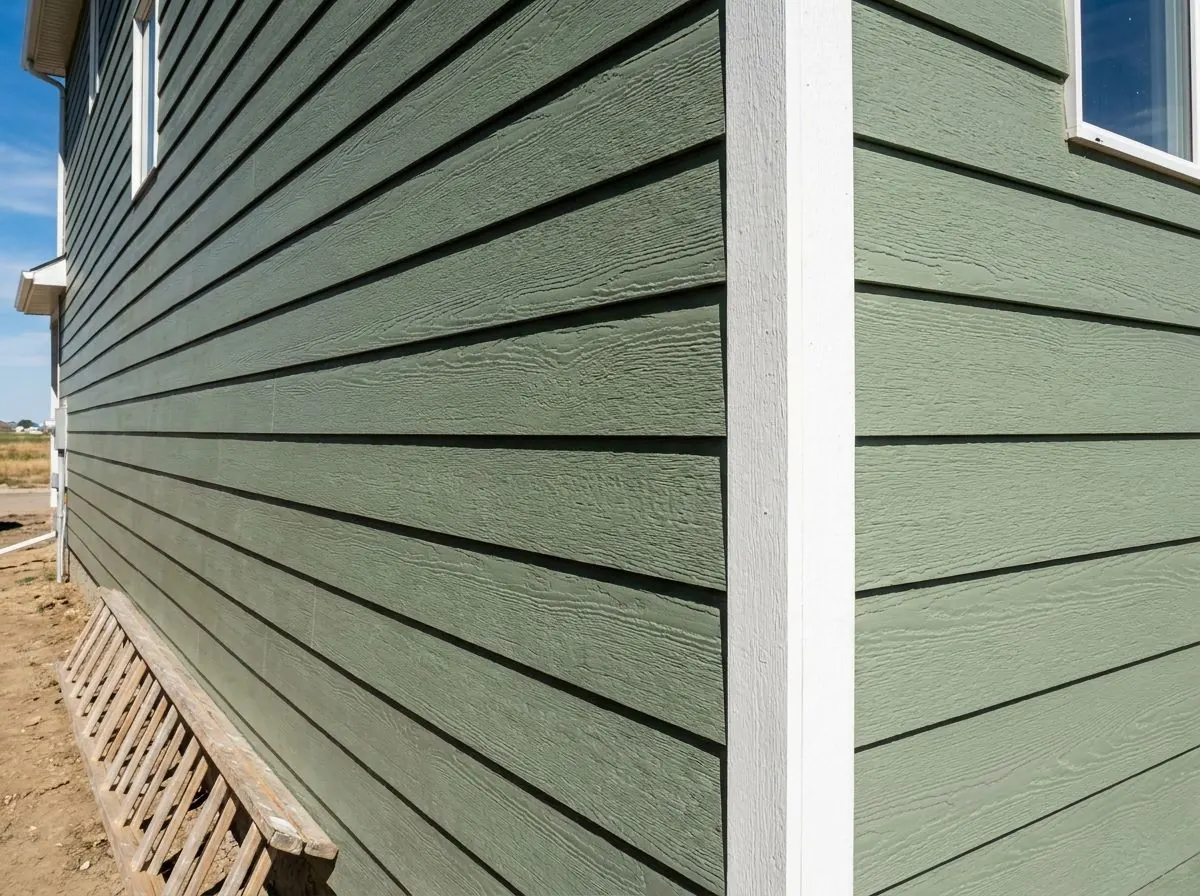
LP SmartSide Engineered Wood Siding
Engineered wood lap and panel siding, detailed for Canadian clearances.
How it works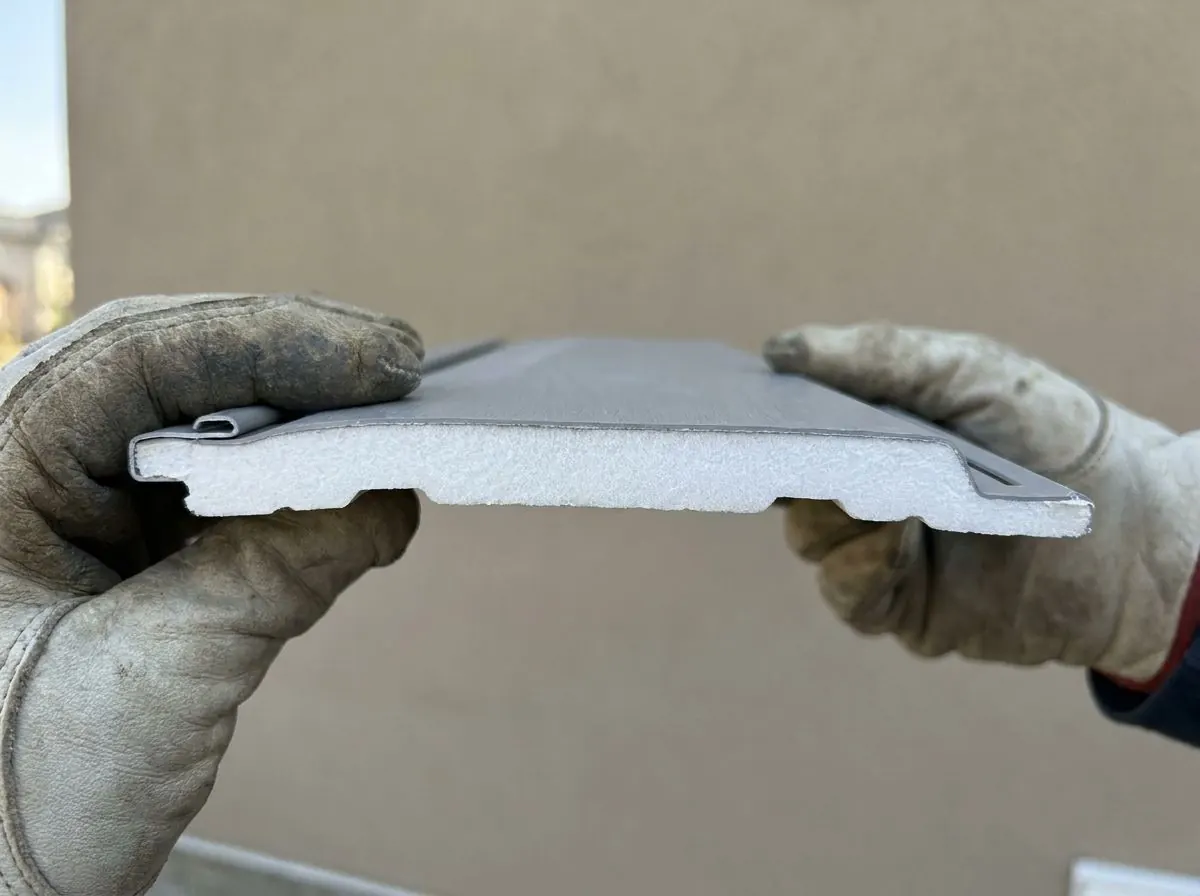
Insulated Vinyl Siding Systems
Foam-backed vinyl: a stiffer face and a modest, tested R-value.
How it worksChoosing Between Them
- Vinyl siding for value
- Choose standard vinyl siding when budget leads, the house already has vinyl, and hail exposure is moderate. It is light, quick to install and a damaged course can be replaced on its own. It is also the weakest of the three against hail, and it gets stiffer and less forgiving of impact in cold weather.
- Insulated vinyl for a flatter, stiffer wall
- Choose insulated vinyl siding when you want to stay with vinyl but want panels that sit straighter over uneven walls and resist impact a little better. Treat the added R-value as a modest bonus, not as the energy upgrade itself.
- LP SmartSide for a wood look
- Choose LP SmartSide siding when you want the deep shadow lines of painted wood and better impact resistance than vinyl, without cedar’s upkeep. Budget for a painted finish, sealed cut edges and careful clearances at grade, roofs and decks.
- Step up to fibre cement when needed
- If your lot has taken repeated hail, or a wall sits close to the property line, fibre cement instead of either family is often the better answer, and we will say so.
Vinyl & SmartSide: Common Questions
Vinyl or LP SmartSide for a Calgary home?
After hail, should I re-side in vinyl again or change materials?
Can vinyl or LP SmartSide go on a wall close to the property line?
Other Siding & Exterior Services
Talk to Us About Vinyl & SmartSide
Tell us about the house and what is going wrong with the walls. We will recommend the system that fits, including when a cheaper one will do.